

For much of our lives, leadership was understood in fairly narrow terms. It was associated with authority, decision-making, and control. Leaders were expected to set direction, define goals, and move people forward. Leadership lived in titles, roles, and positions of responsibility. It was something exercised by managers, executives, and those formally in charge.
That model made sense in a world that valued predictability, hierarchy, and linear progress. Clear plans, strong opinions, and decisive action were rewarded. Leadership was measured by outcomes and efficiency.
What I’m seeing now is that this definition of leadership is no longer sufficient for the world we are living in.
Today, leadership is less about directing others and more about being in service to what is trying to emerge. It is not confined to roles or titles. It shows up in families, communities, creative work, conversations, and the ways we relate to change. Leadership is no longer something reserved for those at the top of a structure. It is a way of being in relationship with others and with life itself.
Leadership at this edge asks for a different set of capacities. The ability to hold space when things are unclear. The willingness to stay present when there is no immediate solution. The courage to listen deeply rather than rush to action. The discernment to sense when to move and when to wait.
This kind of leadership is grounded in inquiry. Not inquiry as analysis, but as a lived posture of curiosity, humility, and attention. It recognizes that many of the questions we are facing cannot be solved quickly or individually. They require time, dialogue, and the participation of many voices. Leadership, in this sense, becomes about creating conditions where insight can arise rather than imposing answers.
In my own life, this understanding of leadership has been shaped through experience rather than theory. Grief taught me that effort does not guarantee outcomes. Travel exposed me to ways of living that challenged my assumptions. Solitude strengthened my capacity to stay present without constant validation. Years of leadership fatigue revealed how easily responsibility can be carried beyond what is truly ours. Together, these experiences reshaped how I understand contribution and responsibility.
What leadership asks of me now is steadiness. The ability to remain engaged without trying to control the outcome. The capacity to listen, to reflect, and to respond from a deeper place. Leadership becomes less about being out in front and more about being fully here.
This way of leading naturally changes the kinds of relationships that form around it. People who are looking for certainty or quick fixes often move on. Those who are willing to take responsibility for their own sensing and decision-making tend to stay.
What develops over time is not followership, but shared ownership and mutual respect.
Leadership at the edge is not loud. It does not announce itself. It is felt in the quality of presence someone brings into a room, a conversation, or a moment of uncertainty. It is expressed through patience, discernment, and care.
Perhaps this is what leadership is being asked to become now. A practice of service, attention, and inquiry. A way of meeting complexity without collapsing into urgency. A commitment to staying awake and responsive as new ways of living and working take shape.
____________________________________________________________________________________
If this piece resonated, you may want to explore the full three-part series.
-
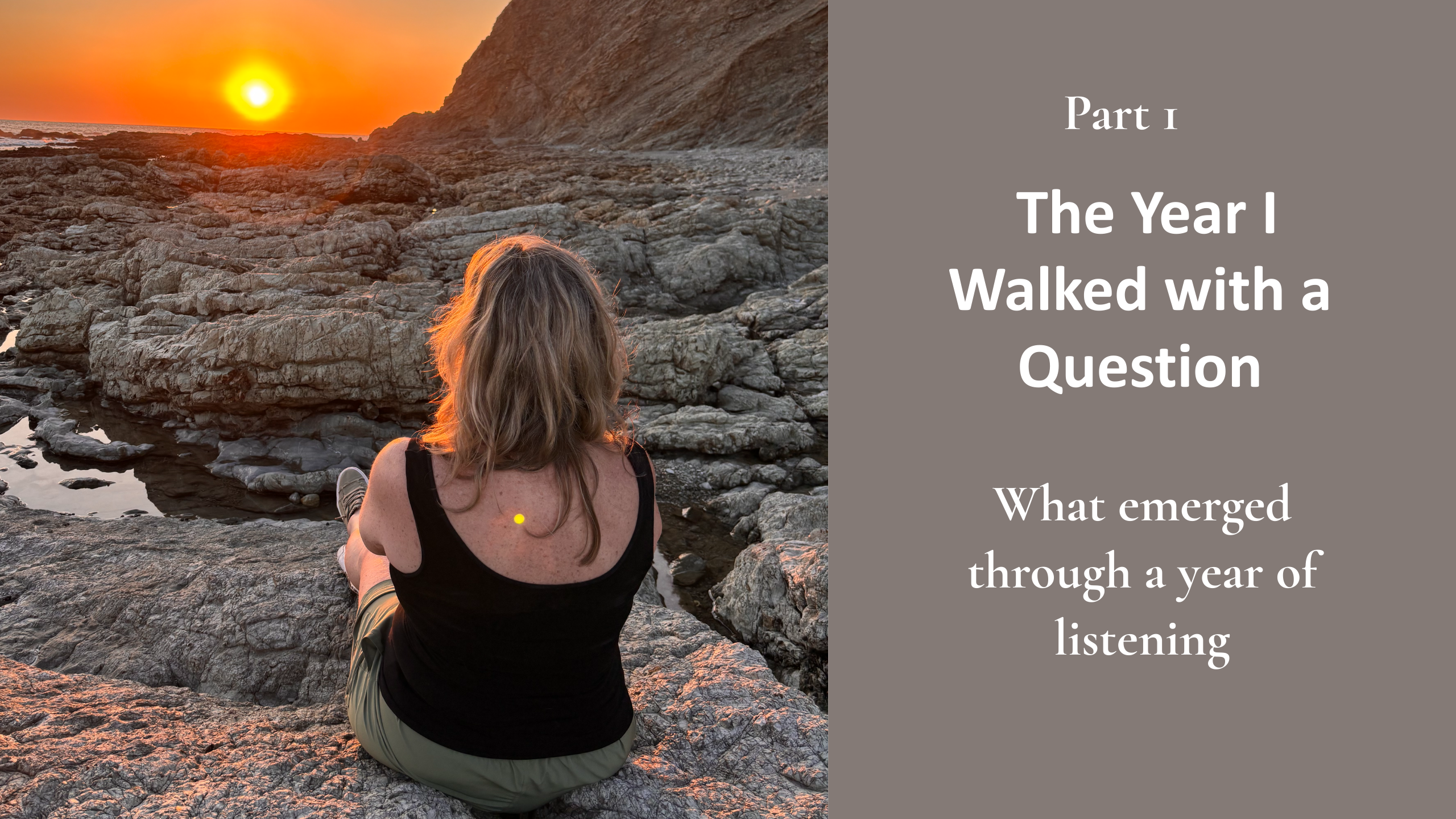
Part 1: The Year I Walked with a Question is a personal reflection on what can emerge when we stop forcing answers and begin listening more deeply.
-
Part 2: Why Living in Inquiry Matters Right Now explores how inquiry functions as a stabilizing force in a rapidly changing world.
-
Part 3: Leadership at the Edge looks at what leadership becomes when presence, permission, and discernment matter more than certainty.
Together, these reflections form a larger conversation about how we live, lead, and listen in this season of change.
If you’re finding yourself in a similar place — sensing that something is shifting, but not yet clear what it’s asking of you — I’m currently offering a small number of Clarity Blueprint spaces this winter. It begins with a simple conversation.
Book a Free, No-obligation Call: https://calendly.com/lianne-bridges-1/30min


Please let us know what you think!